Where it fits

Making the change is the fast part.
Agreeing on it isn't.

FoldBack carries a design decision from “someone noticed something” to “it shipped, and we still know why” — through the running app and the agent's terminal. Here is where it lands in each stage of your week.

The loop

Scroll sideways to follow the stages →

Once
Connect
Repo, journeys, design system, glossary
⇢
1
Shape
Product · Design
Three designs, on the real element
→
2
Decide
Whoever it affects
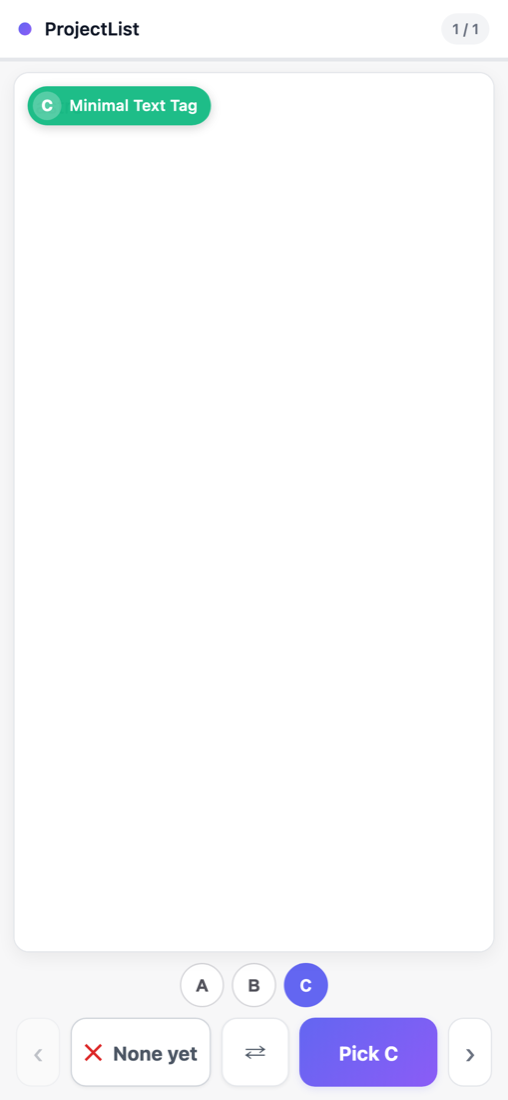
A / B / C on a phone. A margin, recorded
→
3
Build
Engineering
Queued, describing itself
→
4
Ship
Automatic
PR scan: risk, journeys, coverage
→
5
Tell
Marketing
Demo and assets, from the real thing
→
6
Learn
Product
Health, coverage, the decision log
↺ Back round — and six weeks later the agent reads the decision instead of guessing
🧭 🎨 ⌨️ 🤖 👥
Connect — a developer, once
One command, and the repo describes itself
Works with what you already use

Everyone keeps their own tools.
FoldBack meets each of them where they work.

Nobody adopts one workflow. The developers argue about editors, product lives in the browser, marketing lives in the doc. FoldBack does not ask any of them to move — it has a touchpoint in each, and they all write to the same decision.

⌨️
Developersin their agent or editor
Skills are markdown procedures, not plugins — anything that reads an instruction and runs a command drives FoldBack. Plus the PR scan in CI.
🧭
Productin the running app
One script tag. Select an element, ask for options, send a walk. Nothing installed, no account needed to answer one.
🎨
Designbetween the file and the build
Variants are generated against your real tokens, so what comes back is on-system rather than a nice picture that cannot be built.
📣
Marketingafter it ships
The same walk that approved the design approves the headline and the hero image. Demos are drafted from the journeys, not from memory.

One decision, written once, readable by all four — and by the agents that come after them.

Stage by stage

Connect

Engineering · once, ~10 min

Teach FoldBack your product, so everything after this knows what it is looking at.

/foldback-connect # repo, environments, keys, SDK tag, PR scan
/foldback-journeys # the critical paths through your app
/foldback-design # design system — tokens, type, spacing
/foldback-design # the canonical name for every feature
What comes back
✓52 components across 14 routes
✓6 journeys found in tests and routes
✓Design system — 38 tokens, 4 type scales
✓PR scan installed and reporting
→A shared vocabulary. When someone says “the tags”, the human and the agent point at the same component.

Shape it

Product · Design

Turn “this feels off” into something you can actually look at.

Doesn't exist yet → the Builder: wireframes and prototypes before anyone writes code (/foldback-builder).
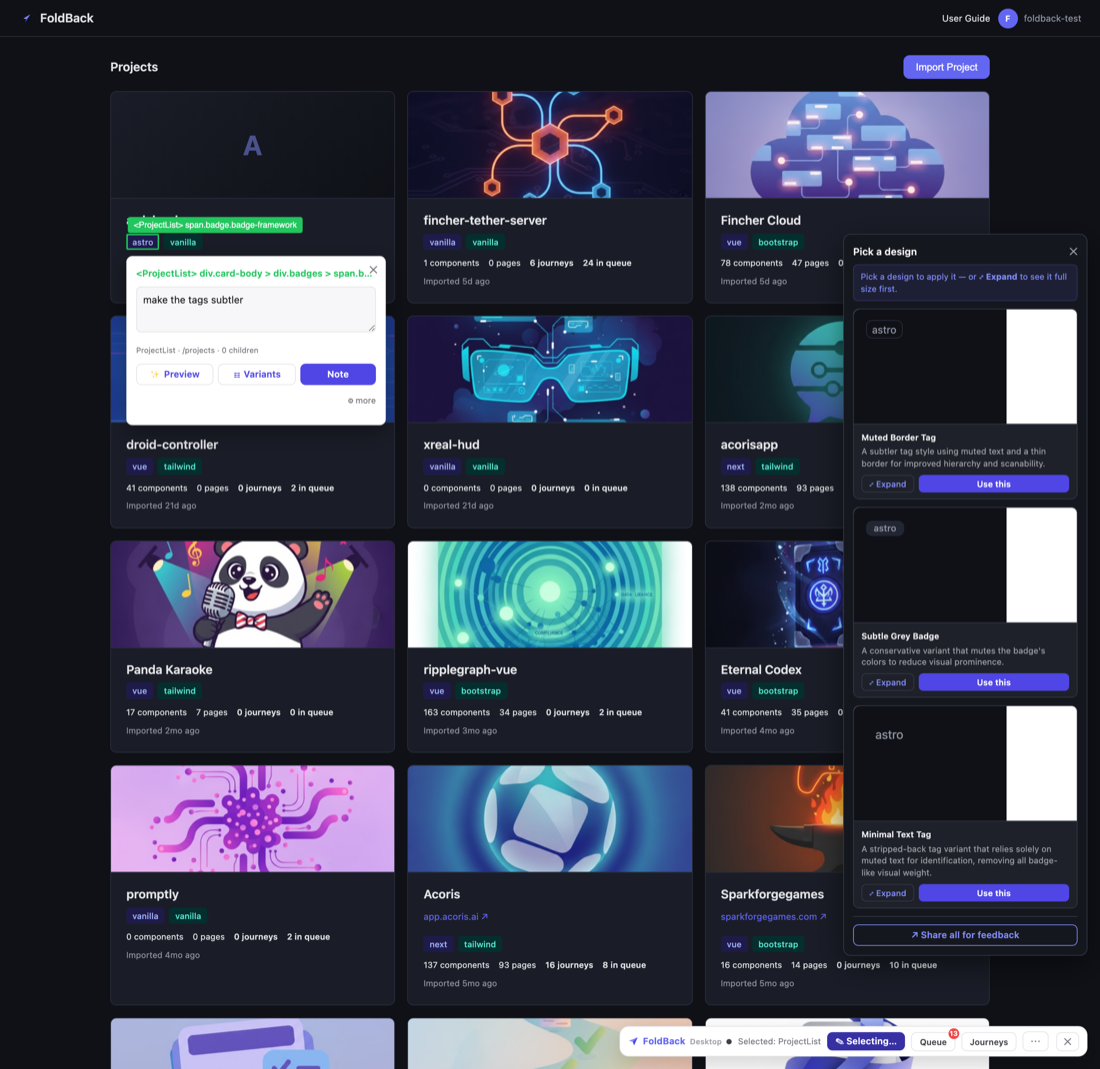
Exists and is wrong → on the live app: turn on Select, click the element, type “make the tags subtler”, press ☷ Variants. Three designs render in place, on the real element, at its real width.
What you see
make the tags subtler
Muted border
Subtle grey
Text only
→Options instead of opinions. The argument stops being “I think the tags are loud” and becomes “here are three — which one”.

Decide

Whoever the change affects

The stage most tools skip, and the one that actually costs the week.

Small — ask your own team. Press ↗ Share all for feedback. One link. People tap through A / B / C on a phone between other things. Change your mind and the vote moves with you rather than counting twice.
/foldback-review # 2–10 options, tap yes/no from a phone
/foldback-review # a guided walk over a whole changed flow
🎯
Quick feedback on one element or designThree options, one link, answers in minutes rather than a meeting.
💬
Re-check a conversational workflow without re-stepping the conversationThe walk replays the turns, so a reviewer judges the flow instead of driving it.
⚡
Test a multi-step or multi-turn service in one passRather than manually reviewing each step in the app, every time.
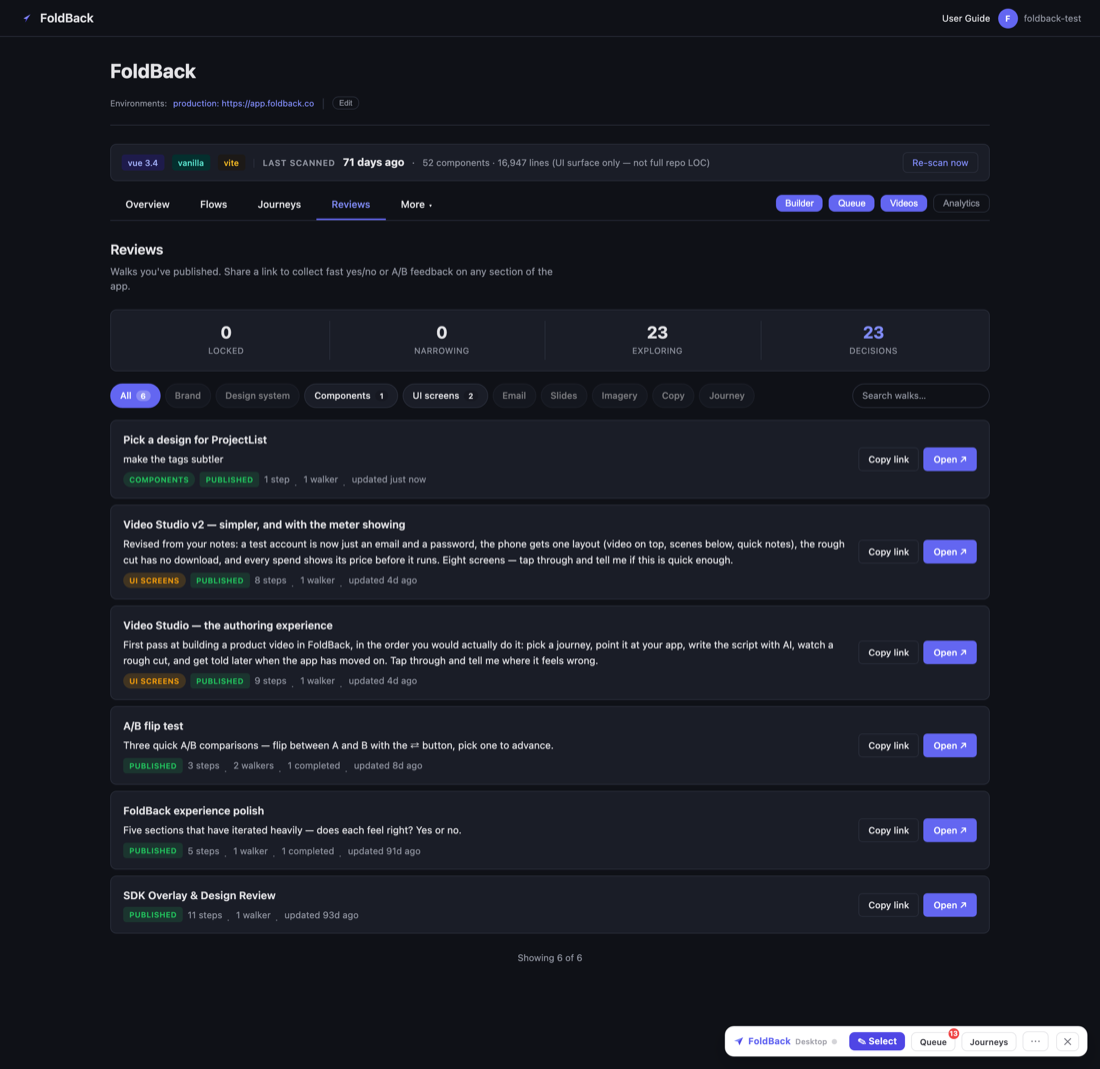
Votes arriving
A
B
C
→A Decision: the winner, who chose it, and the margin. “Picked by four of five.” A record that outlives the conversation.

Build

Engineering + agents

The winner is already queued, describing itself. Nobody writes the ticket.

/foldback-builder # on-page edits land in source as you make them
/foldback-queue # or work the queue: minor → epic, each sized
/foldback-design # on-system, or hand-styled?
/foldback-connect # run the PR's scan before you open the PR
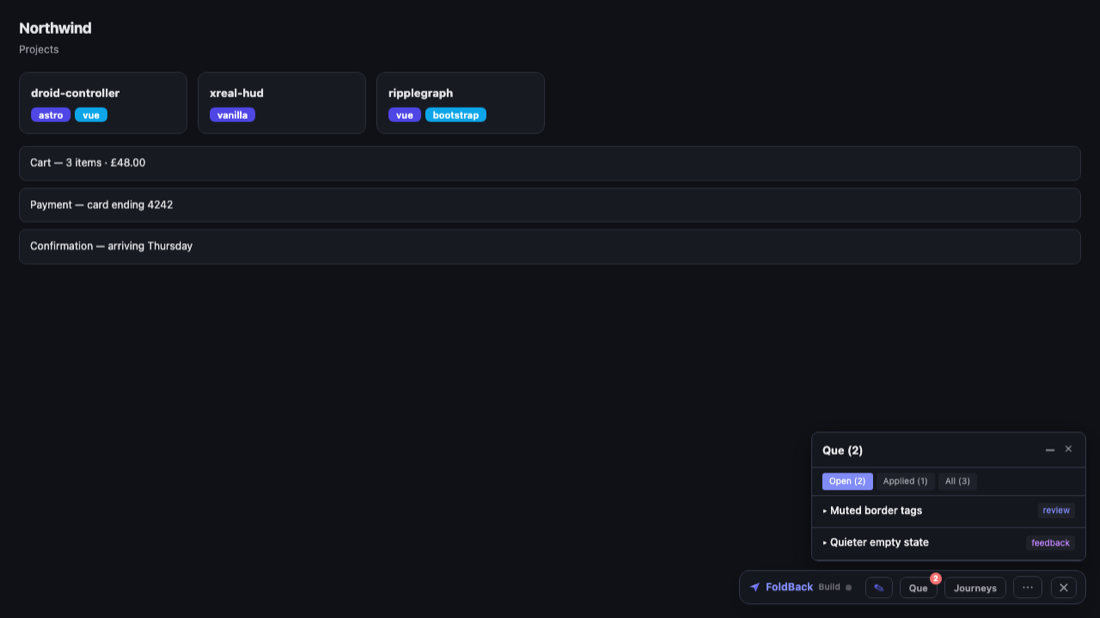
The queue, sizing itself
minor→ standard→ major
✓applied to ProjectCard.vue
✓tests pass, no journey touched
→Each change carries the build it was reported against — version, commit, branch, even the theme the reporter was in — so weeks later an agent can tell whether it still applies.

Ship

Engineering · mostly automatic

The GitHub Action scans every PR: risk, journeys touched, coverage moved.

/foldback-journeys # drive the real app — broken journeys, dead links
/foldback-connect # audit a requirement, fix, file, capture before/after
The scan, on pull request #418
✓2 journeys touched — checkout, sign-up
✓risk: minor
✓coverage +3%
→A release where the things that changed are the things you decided to change.

Tell people

Marketing

Where the earlier stages pay a second time — the material already exists.

/foldback-video # storyboard + script + judge, from a real journey
/foldback-review # same approvals, pointed at a headline or hero image
Scenes capturing themselves
✓7 scenes from a real journey
✓script judged: on target for 45s
→Launch material true to the product, because it was generated from the product rather than from someone's memory of it. Guide pages declare their sources, so a code change flags a stale doc before a customer finds it.

Learn

Product

Health, journey coverage, the decision log, and the queue as a running picture of what the team is choosing to care about.

Health, over the last six weeks
→And when an agent refactors that component six weeks from now, it reads the decision instead of guessing.

A Tuesday

One small change, end to end. Nobody wrote a ticket. Nobody scheduled a review.

09:40
Support says the tags on the projects list are “shouty”. The PM opens the app, selects one, types make the tags subtler, and gets three designs on the real element.
09:44
Not sure which. Share all for feedback → the link goes in the team channel.
10:15
Four people have tapped through on their phones between other things. C wins, four to five. The decision locks with the ratio recorded.
10:16
The change is already in the queue, describing itself, carrying the build it was seen on.
14:20
A developer runs /foldback-queue. Minor tier: apply, test, done. The PR scan says no journey was touched.
6 weeks
An agent refactoring that component reads the decision instead of guessing — and does not put the loud tags back.
Enabling your team

Each stage gives someone their part of the decision

Read a row to see a stage; read a column to see your own week.

StageProduct / MarketingDesignEngineering
Connect——One command teaches FoldBack the repo, the journeys and the design system
ShapeAsk for a change in your own words and get three real options backSame, on the live element rather than a mockup—
DecideSend the options round and read the verdictPick, or put it to the partners it affects—
Build——The winner is already queued and describes itself, so nobody writes the ticket
Ship——Every PR is told what it touched and what it risked
TellDraft the demo from a real journey, and get the headline approved the same way you approved the design——
LearnSee what the team decided, what it covered, and what it cost—The next agent reads the decision instead of guessing

Nobody in the left column installs anything

Product and marketing work in the browser. The commands live where the developer already is. The decision ends up somewhere both of them — and every agent that comes after — can read it.

Get early access FoldBack for Product